Restaurant Entry Design
Why the First 30 Seconds Matter Most
In restaurant design conversations, the focus often jumps straight to bars, dining rooms, and kitchens. But your guests form a powerful first impression before they see any of that, within the first 30 seconds of stepping through the door. That's where restaurant entry design quietly makes or breaks the experience.
By the time a guest arrives, they've likely seen your brand online, read reviews, or heard about you from friends. The entrance is where the brand's digital promise must match the physical reality of the space and the service. Done well, it reassures guests: "You're in the right place. We're ready for you." Done poorly, it introduces friction, confusion, and doubt before anyone says hello.
The Three Core Jobs of Restaurant Entry Design
A strong restaurant entry does far more than provide a door and a host stand. It has three essential responsibilities:
1. Create a Focused Brand Moment
The entry should offer a controlled first impression, not a full reveal.
Guests should immediately sense the concept's tone and quality.
Finishes, lighting, and key design elements give a preview—an "amuse-bouche" of what's to come.
You're not trying to say everything at once; you're piquing interest and setting expectations.
2. Establish Intuitive Flow
A good restaurant entry design removes uncertainty.
From the moment guests step inside, it should be obvious where to stand and where to go.
Wayfinding (visual cues, layout, and sightlines) should guide them without signs shouting instructions.
The space should comfortably handle arrivals and queues without blocking the door, bar, or pathways.
3. Set Up the Human Interaction
The entry is where design and service meet.
The space should make it easy for staff to offer a warm, confident greeting.
Sightlines between the door and the host or first point of contact are critical.
When the environment supports the team, staff can focus on hospitality instead of fighting the layout.
When these three jobs, brand moment, flow, and staff interaction, are aligned, the first 30 seconds set a positive trajectory for the rest of the visit.
Design, Flow, and Staff: An Equal Partnership
It's tempting to view restaurant entry design as primarily an aesthetic decision. In reality, the most successful entries treat design, operational flow, and staff behavior as equal partners.
Ask yourself:
- Is the entry visually aligned with the brand, or does it feel like an afterthought?
- Can first-time guests navigate the space without hesitation or awkwardness?
- Does the layout make it easier, or harder, for staff to recognize arrivals and welcome them promptly?
A beautiful entry that creates a bottleneck is a recurring operational headache. A purely functional entry, devoid of emotional impact, feels transactional and forgettable. The goal is a balanced approach where the physical environment, guest movement, and staff choreography are intentionally coordinated.
Three Common Entry Strategies (And When to Use Them)
Most restaurants fall into one of three broad entry strategies. None is inherently better; each supports a different kind of experience.
1. The Controlled, Intimate Introduction
Guests step into a smaller, more focused space before seeing the main dining room or bar.
The host or greeter is the clear focal point.
Guests see just enough of the restaurant to be intrigued.
Finishes and lighting quietly communicate the level of quality to come.
This approach works well for service-forward concepts that prioritize personal recognition, storytelling, and a sense of progression.
2. The Framed Heartbeat
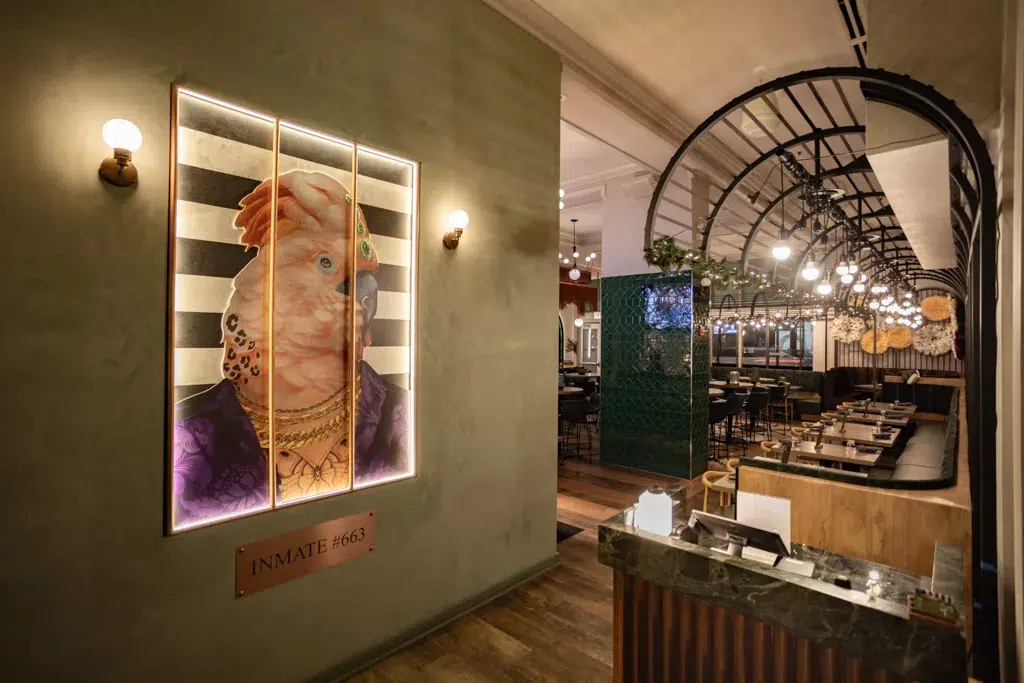
Here, the entry is still relatively controlled, but guests have a clear sightline to the "heartbeat" of the operation—often a hearth, open kitchen, or bar.
Guests are personally welcomed, then naturally drawn to a defining element of the concept.
The entry acts as a frame: it introduces the brand while directing attention to the food, the fire, or the beverage program.
This strategy suits restaurants that want guests to understand what they're about from the front door, without giving away every detail at once.
3. The Immersive "You're In It" Moment
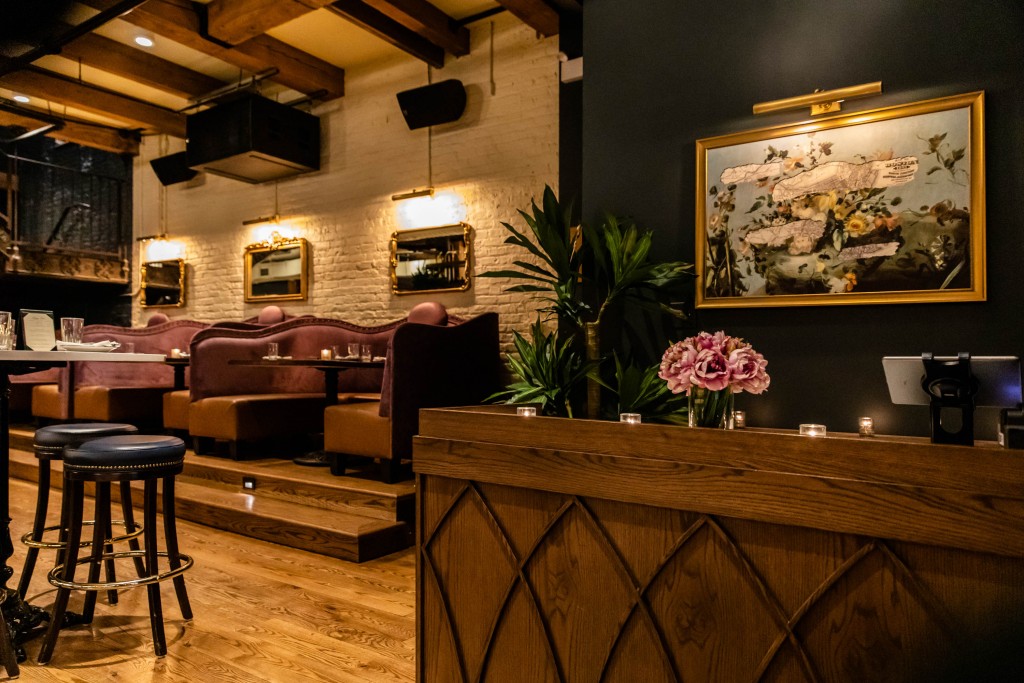
In more social, compact, or bar-driven concepts, guests are dropped directly into the energy upon entry.
The bar, dining room, and buzz of activity are immediately present.
Often, guests are encouraged to start at the bar as part of a tiered experience.
The first view from the door becomes the hero image of the entire restaurant.
This can be highly effective when the brand centers on energy, community, and social connection, as long as the operational flow supports it.
Don't Undersize the First Touchpoint
One of the most common tensions in restaurant entry design is the instinct to minimize non-revenue space. It's easy to see the entry as "lost tables." But when the first touchpoint is too tight, unclear, or chaotic, it can:
- Increase guest anxiety right at the start.
- Slow down host and server performance during peak times.
- Undermine the feeling of hospitality you're investing in everywhere else.
Strategically allocating enough square footage for a proper greeting, comfortable waiting, and clean circulation is not a luxury, it's a business decision that supports throughput, check averages, and guest loyalty.
A Quick Self-Check for Your Restaurant Entry
If you're planning a new concept or evaluating an existing space, start with a few simple questions:
-
What is the very first thing guests see and feel when they step inside?
-
Is there a clear, intentional focal point, or are they scanning for clues?
-
Does the entry clearly align with one of the strategies: controlled, framed, or immersive?
-
Where does the first human interaction naturally happen, and does the design support it?
-
Have you invested in this moment with the same care you give to the bar, kitchen, or dining room?
Get the restaurant entry design right, and you're not just improving the first 30 seconds, you're building a stronger foundation for every touchpoint that follows.