How to Optimize Restaurant Layout for Superior Operational Efficiency
Why Operational Efficiency is Crucial for Restaurants
In restaurant design, it's easy to focus solely on aesthetics and ambiance. However, without a well-thought-out operational flow, even the most beautifully designed spaces can suffer from subpar service. As restaurant operators know, inefficiencies directly impact customer satisfaction and profitability. This makes optimizing operational flow a cornerstone of successful restaurant design.
Separating Guest and Staff Traffic
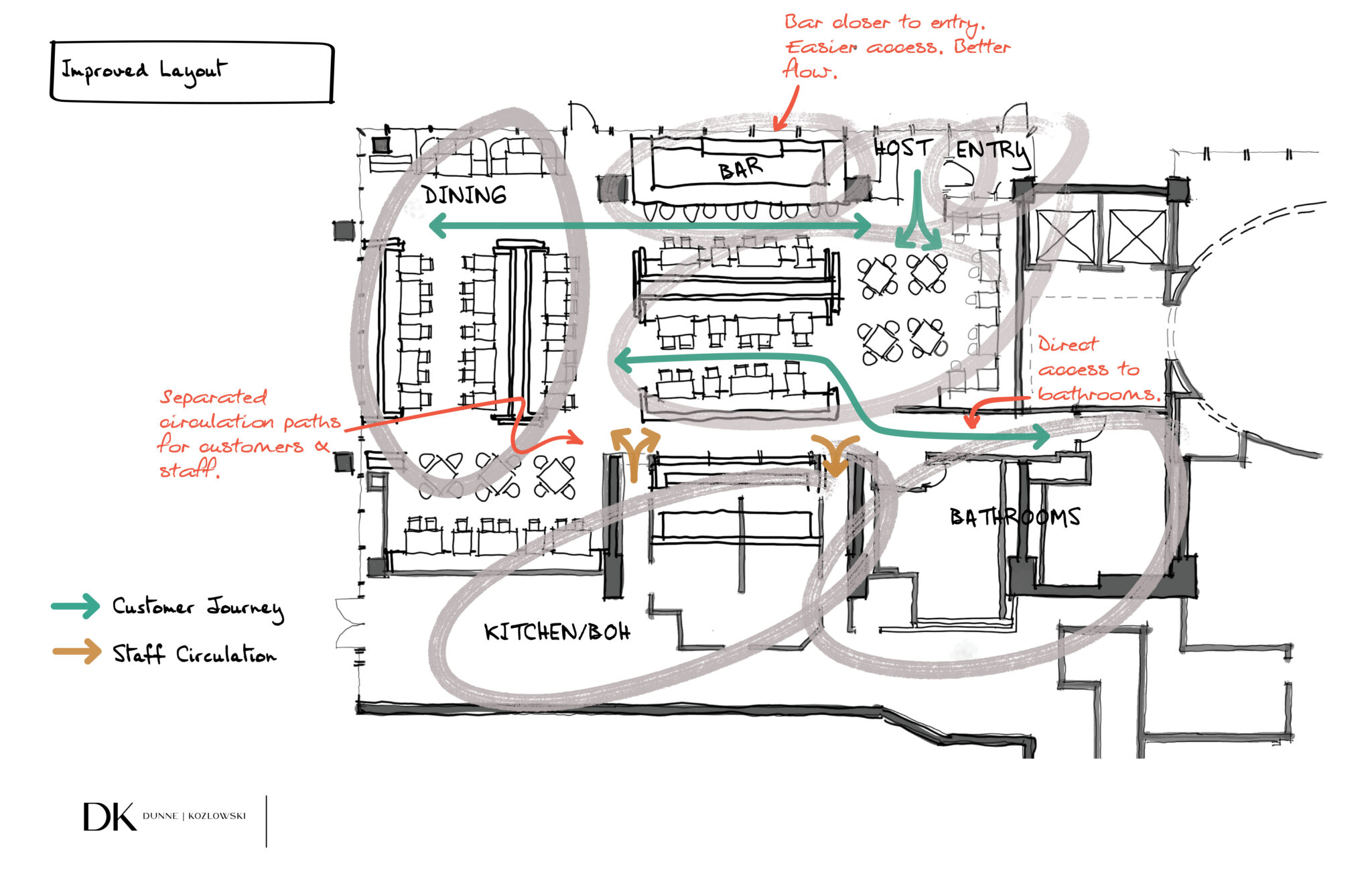
One foundational strategy for improving operational efficiency is separating guest and staff pathways. Overlapping paths often lead to congestion, service delays, and compromised guest experiences. By creating distinct routes for guest entry, dining areas, patios, and private dining rooms (PDRs) separate from staff service pathways, you significantly reduce friction and enhance overall service speed and effectiveness.
Efficient kitchen workflow is essential to delivering quality food swiftly and seamlessly. The optimal kitchen layout follows a clear "prep-cook-plating" sequence:
Prep stations: Positioned at the kitchen's back area to ensure initial preparations don't interfere with cooking.
Cooking stations: Centrally located to ensure efficient transfer between prep and plating.
Plating and Expo stations: Located near service entry points to expedite food delivery to guests.
By adhering to this layout, kitchens can significantly reduce unnecessary movement, enhance staff productivity, and deliver dishes promptly.
Managing "Clean Out" vs. "Dirty In" Pathways
Another critical yet often overlooked aspect is separating "clean out" (food exiting the kitchen) from "dirty in" (dishes and waste returning). Mixing these paths can negatively affect hygiene perceptions and guest comfort. Ideally, paths from the kitchen carrying food to the dining area should never intersect with guest routes to restrooms or waste disposal areas, thus preserving cleanliness standards and enhancing guest confidence.
Strategic Bar and POS Placement
Strategic placement of bars and Point-of-Sale (POS) stations directly contributes to operational efficiency. Bars positioned near entrances, with customer and service access points at opposite ends, reduce congestion and service bottlenecks. Similarly, well-placed POS stations throughout the dining area minimize server downtime and unnecessary walking, allowing staff to spend more time engaging guests and improving overall table turnover.
Balancing Seat Count with Service Efficiency
Restaurant operators frequently face the challenge of balancing maximum seat counts with necessary operational efficiencies. While additional seats might seem beneficial initially, overcrowding often leads to slower service and dissatisfied customers. In reality, reducing seats to facilitate better service flow and quicker turnarounds can often yield higher profitability and customer satisfaction. It's about quality over quantity, efficient service leads to faster table turns and increased revenue.
The Bottom Line: Operational Efficiency Drives Success
Prioritizing operational efficiency in restaurant design is not just about logistics, it’s integral to delivering exceptional guest experiences. Thoughtfully planned operational flows ensure your restaurant performs effectively, enhancing both customer satisfaction and long-term profitability. By integrating these efficiency strategies, your restaurant can achieve a harmonious balance between aesthetics and functionality.
2025 Restaurant Projects
The Greggory - South Barrington
Named as a Top 50 Steak Restaurant in North America